
Avoiding common link-building mistakes is essential for protecting your rankings and building long-term authority in search results. Many websites lose visibility not because link-building doesn’t work, but because they rely on shortcuts that violate quality standards. Modern algorithms from Google evaluate links as trust signals, measuring relevance, context, and editorial intent rather than sheer volume. When links appear manipulative or disconnected from content value, systems like SpamBrain can simply ignore them, or worse, trigger penalties.
A sustainable SEO approach focuses on quality, relevance, and user benefit. Understanding link-building mistakes helps marketers avoid wasted budgets, declining traffic, and damaged credibility. This guide explains where most strategies go wrong and how ethical, value-driven methods lead to stronger authority. By learning what to avoid, you create a safer foundation for backlinks that actually support rankings, trust, and long-term growth.
Why Link-Building Still Matters in SEO?
Backlinks remain one of the strongest ranking signals, but only when they are earned correctly. Understanding why link-building still matters helps clarify why avoiding link-building mistakes is so important. Search engines like Google treat links as endorsements, signals that another website trusts and validates your content. When links come from relevant, authoritative sources, they strengthen topical authority and improve search visibility.
However, modern SEO no longer rewards links built purely for numbers. Systems such as SpamBrain analyze context, relevance, and natural patterns to discount bad link-building practices. This means links must align with content quality, search intent, and real audience value. Avoiding link-building mistakes ensures your backlinks support credibility instead of weakening it. When executed properly, ethical link-building services enhance trust, drives referral traffic, and reinforces long-term SEO performance.
Common Link-Building Mistakes Explained
Many SEO campaigns fail because they repeat the same link-building mistakes without realizing the long-term impact. These mistakes usually come from chasing fast results instead of building real authority. Common link-building errors include prioritizing quantity over relevance, relying on inflated metrics, and ignoring how links fit within surrounding content. Search engines like Google evaluate backlinks as contextual signals, not just numbers, which means low-quality links often provide no ranking value.
Another issue is misunderstanding how modern algorithms assess trust. AI-driven systems such as SpamBrain are designed to detect unnatural patterns, repetitive anchors, and irrelevant placements. These link-building mistakes don’t always cause immediate penalties, but they silently devalue your link profile over time. Recognizing these errors early helps you shift toward ethical, relevance-focused strategies that support sustainable SEO growth instead of short-lived gains.
Ignoring Search Intent and On-Page SEO
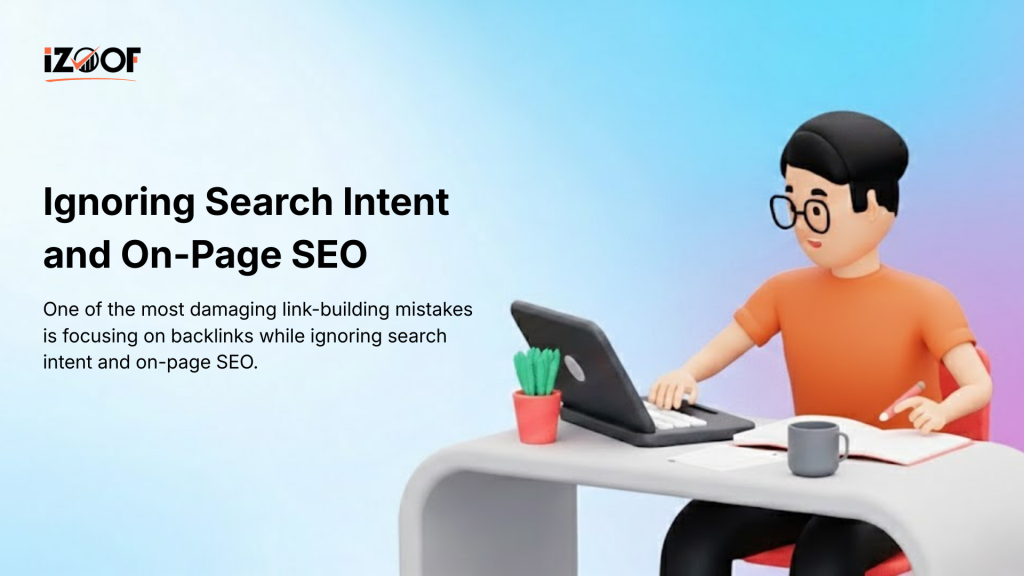
One of the most damaging link-building mistakes is focusing on backlinks while ignoring search intent and on-page SEO. When users click a link and land on a page that doesn’t match their expectations, they leave quickly. This creates poor engagement signals that search engines like Google actively monitor. Even strong backlinks lose value if the destination page fails to satisfy user intent or has a weak content structure.
On-page issues such as thin content, poor keyword targeting, slow load times, or confusing layouts weaken the impact of any link-building effort. Modern algorithms assess how well a page answers a query, not just how many links point to it. Ignoring this balance is a classic link-building mistake that leads to wasted outreach and declining performance. Aligning content quality, intent, and optimization ensures backlinks reinforce relevance instead of exposing weaknesses.
Creating Content That Isn’t Link-Worthy
Publishing weak or generic content is one of the most common link-building mistakes that limits backlink growth. Website owners are unlikely to reference pages that offer no unique value, data, or insight. Search engines like Google reward links that point to resources people genuinely want to cite, such as guides, studies, tools, or expert analysis. If your content looks the same as everything already ranking, it gives others no reason to link.
Many SEOs attempt outreach without first evaluating whether their content deserves attention. This leads to low response rates and wasted effort. Tools like Ahrefs often show that top-linked pages share one thing in common: originality. Avoiding this link-building mistake means investing in depth, clarity, and information gain. When content solves real problems better than competitors, backlinks are earned naturally rather than forced.
Buying Links and Paid Placements
Buying backlinks may seem like a shortcut, but it remains one of the riskiest link-building mistakes in modern SEO. Search engines such as Google clearly classify paid links that pass PageRank as a violation of their link spam policies. With AI-driven systems like SpamBrain, unnatural link patterns are easier than ever to detect and neutralize. Even if paid links initially boost rankings, they often lead to devaluation or manual actions over time.
Many site owners confuse sponsored placements with legitimate outreach. Without proper attributes like rel=”sponsored”, these links create an unnatural backlink profile. Tools such as Ahrefs may show link growth, but metrics alone cannot protect you from penalties. Avoiding this link-building mistake means focusing on organic mentions, editorial links, and white hat guest posting strategies that build authority safely and sustainably.
Chasing Quantity Over Link Quality
One of the most damaging link-building mistakes is prioritizing the number of backlinks over their actual value. Many websites rush to acquire hundreds of links from low-quality or irrelevant domains, assuming volume alone will improve rankings. In reality, search engines like Google evaluate context, relevance, and authority far more than raw link counts. A single link from a trusted, niche-relevant source often carries more weight than dozens of weak mentions.
This mistake is often fueled by overreliance on third-party metrics such as Domain Rating from Ahrefs or Domain Authority from Moz. While useful for comparison, these scores can be manipulated and do not reflect real user engagement. Focusing on quality means earning links from sites with genuine traffic, topical alignment, and editorial standards. Avoiding this link-building mistake helps create a natural backlink profile that supports long-term SEO growth.
Ignoring Topical and Contextual Relevance
Ignoring relevance is a subtle but serious link-building mistake that weakens your SEO signals. When backlinks come from websites unrelated to your niche, search engines struggle to understand your site’s true expertise. Systems used by Google rely heavily on topical alignment and entity relationships, meaning links should make logical sense within the surrounding content. A backlink should function like a recommendation from a knowledgeable source, not a random mention.
Many marketers still chase links from high-authority sites without checking contextual fit. Even strong domains pass little value if the topic is mismatched. Modern algorithms analyze semantic proximity using concepts tied to the Google Knowledge Graph, rewarding links that reinforce subject expertise. Avoiding this link-building mistake requires targeting websites, pages, and articles that naturally align with your content. Relevance-driven links improve trust, rankings, and long-term visibility far more than generic placements.
Over-Optimizing Anchor Text Patterns
Overusing exact-match anchors is one of the most recognizable link-building mistakes that triggers algorithmic distrust. When a backlink profile contains too many keyword-rich anchors, it signals manipulation rather than natural editorial intent. Search engines like Google expect anchors to look organic, often branded, partial-match, or generic phrases such as “learn more” or “this guide.” An unnatural pattern makes your links easier for systems like SpamBrain to flag.
Many SEOs repeat the same anchors across multiple domains, creating a visible footprint. Tools such as Ahrefs or Moz can help audit anchor distribution before it becomes risky. Avoiding this link-building mistake means diversifying anchors, favoring branded terms, and letting contextual mentions occur naturally. A balanced anchor profile looks human, earns trust, and supports sustainable rankings.
Poor Outreach and Low-Value Pitches
Weak outreach is a frequent link-building mistake that results in ignored emails and missed opportunities. Many marketers rely on generic templates that offer no clear value to the site owner. Editors and publishers receive dozens of pitches daily, so messages that feel automated or self-serving rarely get responses. Search-focused brands that succeed with outreach prioritize relevance, personalization, and usefulness rather than volume.
Effective outreach aligns closely with guest blogging strategy best practices. Instead of asking for links, offer something meaningful: original data, a unique perspective, or content that genuinely improves an existing article. Platforms like Ahrefs help identify the right prospects, but human research is still essential. Avoiding this link-building mistake requires treating outreach as relationship building, not link-begging. Thoughtful communication increases acceptance rates and leads to long-term, white hat guest posting opportunities.
Ignoring Local and Geo-Targeted link-building
Overlooking local relevance is a costly link-building mistakes, especially for businesses targeting specific regions. Local backlinks help search engines understand where your brand operates and which audiences you serve. When geo-signals are missing, platforms like Google struggle to associate your site with location-based queries, limiting visibility in local results. This is particularly harmful for service businesses, e-commerce stores with regional delivery, and multi-location brands.
Many SEOs focus only on national or global links and ignore opportunities from local blogs, directories, chambers of commerce, and regional publications. Listings optimized through Google Business Profile and locally relevant mentions reinforce trust and authority. Avoiding these link-building mistakes means balancing broader links with geo-targeted ones. A strong local backlink profile supports map rankings, local pack visibility, and higher conversion-driven traffic.
Building Only Do-Follow Links and Ignoring Balance
Focusing exclusively on do-follow backlinks is a subtle but serious link-building mistakes that creates an unnatural profile. Many marketers assume no-follow links have no SEO value, but modern algorithms used by Google treat link attributes as signals, not strict rules. No-follow, sponsored, and UGC links help search engines discover content, understand brand mentions, and evaluate overall link naturalness.
A backlink profile made up of only do-follow links looks manipulated, especially when growth happens quickly. Studies and guidance from platforms like Ahrefs show that authoritative websites naturally attract a mix of link types. Avoiding these link-building mistakes means embracing balance. Mentions from forums, social platforms, news sites, and citations often include no-follow attributes, yet they strengthen credibility, referral traffic, and trust signals that support long-term SEO.
Excessive Reciprocal Link-Building Risks
Exchanging links too aggressively is another common link-building mistakes that can weaken your site’s credibility. Reciprocal links can occur naturally when two relevant websites reference each other’s content, but problems arise when this practice becomes excessive or planned at scale. Search engines like Google are skilled at identifying patterns that look manipulative rather than editorial. When links are traded purely for SEO value, they lose trust and may be discounted.
Many marketers justify this tactic by pointing to studies showing reciprocal links are common. However, the key difference is intent and volume. Tools such as Ahrefs often reveal that sites abusing link exchanges share similar anchor text, repeated partners, and unnatural growth. Avoiding this link-building mistake means letting reciprocity happen organically. Link out because content adds value, not because you expect a guaranteed link in return.
Conclusion
Avoiding common link-building mistakes is essential for building sustainable authority and long-term search visibility. Modern SEO link-building risks are no longer about shortcuts, inflated metrics, or aggressive tactics. Search engines like Google prioritize relevance, trust, and real editorial value, which means every backlink should make sense for users first. From weak content and poor outreach to over-optimized anchors and paid links, each link-building mistake chips away at credibility rather than strengthening it.
The safest approach is to focus on quality content, contextual relevance, and genuine relationships. Use tools such as Ahrefs for analysis, not decision-making alone. When links are earned through white hat guest posting, thoughtful outreach, and value-driven strategies, they support rankings without risking penalties. Build links like recommendations, not transactions, and your SEO foundation will stay strong even as algorithms evolve.


